Annapurna Base Camp Trek: Complete Guide
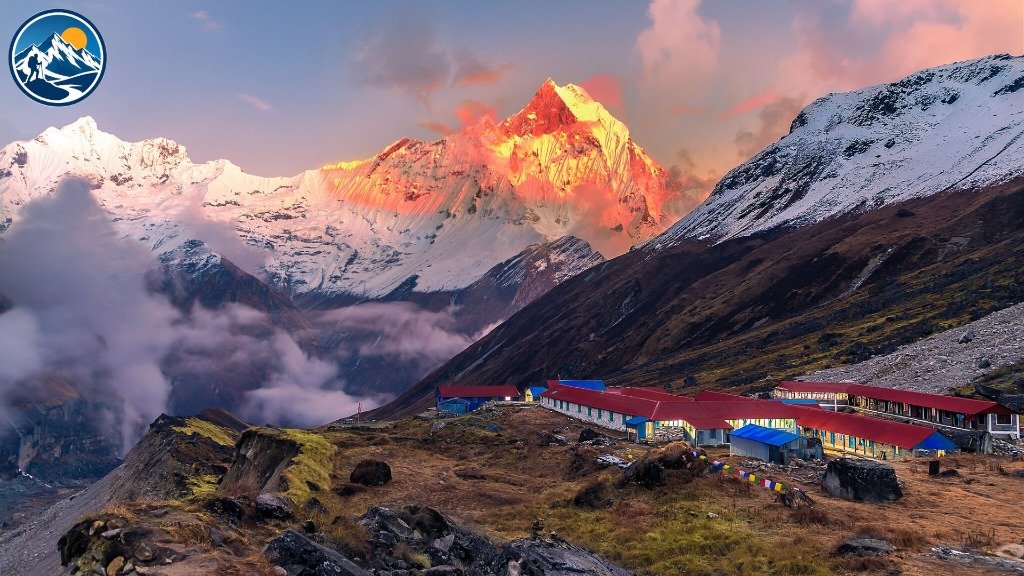
The Annapurna Base Camp Trek is a Himalayan trekking route in Nepal's Annapurna region that leads into the Annapurna Sanctuary, a glacial basin ringed by peaks over 6,000 m, including Annapurna I (8,091 m). The trail passes through mountain villages, terraced hillsides, rhododendron forest, and river valleys before reaching Annapurna Base Camp at 4,130 m (13,550 ft).
The trek typically takes 7–12 days of walking, depending on the itinerary and starting trailhead. Pokhara is the main gateway to the region. It suits both first-time Himalayan trekkers and experienced hikers, though — because the route passes 4,000 m — altitude, cold, and long walking days shouldn't be underestimated. Spring (March–May) and autumn (September–November) are the most favorable seasons.
Annapurna Base Camp Trek at a Glance
Key expedition parameters for skimmers and quick planning:
| Detail | Information |
|---|---|
| Country / Region | Nepal, Annapurna Region |
| Main Destination | Annapurna Base Camp (ABC) |
| Highest Point | 4,130 m (13,550 ft) |
| Main Gateway | Pokhara (drive to roadhead) |
| Typical Duration | 7–12 days |
| Total Distance | 55–80 km round-trip (route-dependent) |
| Difficulty | Moderate — steep stone steps, long walking days, high-altitude terrain, but no technical climbing |
| Best Seasons | Spring (March–May) and Autumn (September–November) |
| Accommodation | Teahouses and trekking lodges |
| Main Route | Trailhead → Chhomrong → Sinuwa/Bamboo → Deurali → Machhapuchhre Base Camp → Annapurna Base Camp |
| Protected Area | Annapurna Conservation Area (7,629 km²) |
| Permits Required | ACAP (enforced) + licensed guide (mandatory since April 2023) + agency-processed TIMS |
| Main Mountain Views | Annapurna I (8,091m), Annapurna South, Hiunchuli, Machhapuchhre (Fishtail) |
What Is the Annapurna Base Camp Trek?
Annapurna Base Camp sits inside the Annapurna Sanctuary — a glacial basin entered through the narrow Modi Khola gorge, enclosed by towering peaks including Annapurna I, Annapurna South, Hiunchuli, and Machhapuchhre. The trek is defined by that destination: a dramatic mountain amphitheater reached through several distinct landscape zones.
Where Is Annapurna Base Camp?
Annapurna Base Camp is situated in north-central Nepal within the Gandaki Province, approximately 40 kilometers north of Pokhara in a straight line. It occupies the floor of the Annapurna Sanctuary at 4,130 meters, surrounded by the Annapurna mountain range inside the protected borders of the Annapurna Conservation Area.
What Makes the ABC Trek Special?
The trek compresses subtropical forest, rhododendron woodland, Gurung and Magar mountain villages, river valleys, natural hot springs, and high alpine terrain into one 7–12 day route — a wider range of scenery than most treks of comparable length, without requiring technical climbing skill.
Unlike Everest Base Camp, there is no flight into a weather-dependent mountain airstrip like Lukla; the trailhead is a road drive from Pokhara, which makes the trek logistically simpler to start and end on schedule without flight cancellation risks.
Who Is This Trek Best For?
Trekkers with reasonable fitness and multi-day walking stamina, whether or not they have prior Himalayan experience. It doesn't demand technical skill, but does demand sustained daily walking at altitude — see the Difficulty section below for what "moderate" actually means on this trail.
Route, Elevation, and Landscape
The Annapurna Base Camp route ascends through five distinct biological zones, gaining over 3,000 meters from subtropical river valleys to glacial alpine tundra.
Annapurna Sanctuary Elevation Profile
Staged overnight altitude climb from Pokhara (820m) to Annapurna Base Camp (4,130m).
Where Does the ABC Trek Start and End?
Most modern itineraries take a private 4WD jeep directly to roadheads such as Siwai or Matque (1,400–1,500 m) or Kimche/Ghandruk (1,600–1,940 m), cutting out the dusty gravel-road walk from the older Nayapul trailhead (1,070 m). Treks generally exit via Jhinu Danda and the suspension bridge to the Matque/Siwai jeep stand for the return drive to Pokhara.
The Main Trail Progression
Roadhead (Siwai/Matque or Kimche/Ghandruk) → Chhomrong → Sinuwa → Bamboo → Dovan → Deurali → Machhapuchhre Base Camp → Annapurna Base Camp (4,130 m), then back down via Bamboo and Jhinu Danda to the jeep roadhead and Pokhara.
This is a there-and-back walk through the Modi Khola valley, not a loop — the descent largely retraces the ascent, though it typically moves faster since altitude is no longer a limiting factor.
Main Villages and Stops Along the Route
- Ghandruk (1,940 m): A large, historic Gurung village with slate-roofed houses, mountain museums, and entry trailheads.
- Chhomrong (2,170 m): The last major permanent village before the gorge narrows, famous for its stone staircases and bakery lodges.
- Sinuwa, Bamboo, Dovan & Deurali (2,340–3,230 m): Smaller lodge clusters through the dense bamboo, rhododendron forest, and alpine gateway sections.
- Machhapuchhre Base Camp (MBC, 3,700 m): The threshold to the Sanctuary, offering direct perspectives of Fishtail.
- Annapurna Base Camp (ABC, 4,130 m): The glacial bowl terminus encircled 360 degrees by 7,000m and 8,000m giants.
- Jhinu Danda (1,780 m): Located on the return descent, celebrated for its natural riverside geothermal hot springs.
Landscape by Elevation
- Subtropical forest and terraced farmland (lower trail, ~1,000–2,000 m): Warm, humid, village-dense with agricultural terraces.
- Rhododendron and oak forest (mid-elevation, ~2,000–3,000 m): Cooler, denser tree canopy alive with birdlife and moss.
- Alpine zone (~3,000–3,700 m): More exposed, rockier, far fewer trees, and noticeably windier.
- High-altitude sanctuary (3,700–4,130 m): Glacial moraines, alpine tundra, crisp cold air, mountain-enclosed on all sides.
Elevation Gain Analysis
The trek entails roughly 3,000 m net elevation gain, from a 1,400–1,940 m jeep roadhead to 4,130 m at base camp. Most days gain 300–600 m; the push from Deurali (3,230 m) to Annapurna Base Camp (4,130 m) gains 900 m — the biggest single-day altitude jump on the trek, and the point where acclimatization matters most.
The incline through the glacial basin between Machhapuchhre Base Camp and ABC is a gradual, gentle climb. The physically hardest terrain on the whole route is actually the stone-staircase descent and re-ascent between Chhomrong and Sinuwa — thousands of steep, uneven steps. This uneven distribution is intentional in a well-built itinerary: gradual early days let your body adjust before the altitude push near the end.
Annapurna Base Camp Trek Itinerary
Typical duration: 7–12 trekking days, depending on whether Poon Hill is included, how many buffer days are built in, and which trailhead you start from.
| Day | Route & Destination | Approx. Distance | Overnight Altitude |
|---|---|---|---|
| Day 1 | Pokhara to trailhead, trek to Ghandruk | 8–10 km | 1,940 m |
| Day 2 | Ghandruk to Chhomrong | 9–10 km | 2,170 m |
| Day 3 | Chhomrong to Bamboo | 8–10 km | 2,340 m |
| Day 4 | Bamboo to Deurali | 9–11 km | 3,230 m |
| Day 5 | Deurali to Machhapuchhre Base Camp & Annapurna Base Camp | 7–9 km | 4,130 m |
| Day 6 | Annapurna Base Camp to Bamboo (descent) | 15+ km | 2,340 m |
| Day 7 | Bamboo to Jhinu Danda (hot springs) | 9–11 km | 1,780 m |
| Day 8 | Jhinu Danda to Matque/Siwai roadhead, drive to Pokhara | Trail walk + 4WD road transfer | Pokhara: ~822 m |
| Day 9+ | Buffer day, or Poon Hill / Ghorepani extension | Optional route extension | Varies |
Pokhara to Trailhead & Trek to Ghandruk
Scenic 4WD drive from Pokhara Lakeside along the Modi Khola river valley to the roadhead. Gentle uphill trek through terraced farmland to the historic slate-roofed Gurung village of Ghandruk.
Ghandruk to Chhomrong
Descend into the lush Kimrong Khola basin through oak woodlands, cross the suspension footbridge, and climb the scenic ridge into Chhomrong, the gateway settlement to the inner Modi Khola canyon.
Chhomrong to Bamboo
Tackle the famous Chhomrong staircase descent to Chhomrong Khola, ascend steeply through Sinuwa, and enter deep, mossy bamboo and rhododendron canopy along the narrow canyon floor.
Bamboo to Deurali
Trail ascends steadily past Dovan and the historic Hinku Cave overhang. As you pass 3,000 meters, dense tree cover gives way to alpine scrub and cool glacial breezes.
Deurali to MBC & Annapurna Base Camp
Climb through the canyon gateway into Machhapuchhre Base Camp (3,700m), then follow the gentle glacial basin upward until you are standing in the center of the 360-degree Sanctuary.
ABC Sunrise & Descent to Bamboo
Witness sunrise alpenglow transforming Annapurna I (8,091m) and Fishtail. After a warm breakfast, retrace the trail downhill to Bamboo; breathing becomes instantly easier with altitude loss.
Bamboo to Jhinu Danda Hot Springs
Climb up to Sinuwa and Chhomrong, then branch off towards Jhinu Danda. In the afternoon, take a 20-minute trail down to the natural geothermal pools along the roaring riverbank.
Jhinu Danda to Siwai Roadhead & Drive to Pokhara
Cross the epic 287-meter Jhinu suspension footbridge spanning the river gorge. Walk the final trail to the jeep stand and transfer by private 4WD to your hotel in Lakeside Pokhara.
Why itineraries vary: Three factors drive most differences between packages — whether the Ghorepani–Poon Hill loop is included (adds real distance and 1–2 days), which jeep roadhead you start from (Siwai/Matque cuts more walking than Kimche/Ghandruk), and how many buffer/rest days are built in for weather or pacing flexibility.
Explore our specific route options: 10-Day Classic Sanctuary Itinerary → | 8-Day Express Route → | Short ABC Trek →
Total Distance: A reasonable planning range is 55–80 km round-trip, depending on trailhead and route. Plan around this range and confirm the specific distance for your chosen itinerary with your agency.
Can it be shorter or longer? Yes on both ends. A minimal 7-day version (driving further in, skipping Poon Hill) is achievable for time-constrained trekkers with good fitness. Extending toward 12–14 days by adding Poon Hill, extra acclimatization days, or a slower pace suits first-timers or anyone prioritizing comfort over speed.
Annapurna Base Camp Trek Difficulty
Official Rating: Moderate. No technical climbing skill is required, but the trek combines steep stone staircases, several consecutive 5–8 hour walking days, and a high-altitude finish above 4,000 m. This is a considered rating reflecting terrain, altitude factors, and how the route is classified by licensed agencies.
What Makes the Trek Demanding?
- Elevation: The ~3,000 m net gain, concentrated into a relatively short trip.
- Steep stone steps: Particularly on the ascent sections between lower villages, where staircases can run for hundreds of vertical meters with little flat ground to recover on.
- Long walking days: Several days run 5–8 hours, and the descent day frequently runs longer still.
- Altitude above 3,000 m: Thinner air on top of an already tiring uphill push.
- Descents: Repeated downhill impact stresses knees and quads more than most trekkers expect; treating descent days as "the easy half" is a common and avoidable mistake.
Fitness Benchmark
A reasonable target before departure is being able to walk 8–10 km with 400–500 m of elevation gain without needing an extended recovery, and to climb multiple flights of stairs carrying a light daypack without stopping. If that's already comfortable through regular walking, hiking, or sports, you're likely ready.
How to Train for the ABC Trek (4–6 Weeks Beforehand)
- Cardio conditioning: 3–4 weekly cardio sessions (walking, hiking, cycling, or light running) to build aerobic endurance.
- Stair & incline climbing: Dedicated stair-master or outdoor hill climbing to build the specific quadricep and calf strength required for thousands of stone steps.
- Loaded daypack walks: 1–2 weekly hikes carrying a 5–7 kg pack to condition your shoulders and core.
- Downhill eccentric training: Step-downs, lunges, and downhill hiking practice — descent-related fatigue and knee strain catch more trekkers off guard than climbing does.
Is the ABC Trek Suitable for Beginners?
The trek is achievable for first-timers with reasonable fitness — regular walking or hiking ability, comfort on stairs and inclines, and a realistic training period beforehand. It is not a trek to attempt with zero physical preparation, but it also does not require prior Himalayan or mountaineering experience.
Best Time for Annapurna Base Camp Trek
Compare seasonal weather conditions, temperature variations, and mountain visibility profiles:
The undisputed gold standard for Himalayan clarity, dry trails, and jaw-dropping mountain photography.
Rhododendron forests explode in red and pink blooms. Warmer daytime temperatures and longer daylight hours.
Pristine snowy landscapes and peaceful lodges. Requires cold-weather sub-zero gear and avalanche alertness.
Vibrant green terraces and cascading waterfalls, but frequent rain, slippery stone steps, and active leeches.
| Season | Weather, Mountain Visibility & Trail Conditions |
|---|---|
| Spring (Mar–May) | Mild temperatures, rhododendrons in bloom, generally stable weather; March can still carry cooler conditions, while April–May offer warm days and vivid forest colors. |
| Monsoon (Jun–Aug) | Heavy rain, muddy trails, leeches in the forest, limited mountain visibility. Technically possible but not recommended for most international trekkers. |
| Autumn (Sep–Nov) | The premier trekking season. September is transitional; October and November bring the clearest, most stable high-pressure skies of the year. |
| Winter (Dec–Feb) | Cold, crisp, and quiet with fewer trekkers. Snow can occasionally close the final MBC–ABC canyon, and high lodges operate with skeleton staff. |
Spring in Detail (March to May)
Daytime temperatures at lower elevations reach 15–20°C, with rhododendron forests blooming most vividly through April. Nights near base camp still drop close to freezing regardless of season.
Autumn in Detail (September to November)
October and November offer the most consistent clear-sky days of the year, making them the highest-demand months for teahouse bookings. September sits at the monsoon-to-autumn transition — genuinely different in the first half of the month versus the second, with rain risk early on and some of the year's clearest views once the monsoon fully withdraws.
Planning a September trip? Read our detailed field intelligence: Annapurna Base Camp Trek in September: Weather, Trails & Itinerary Guide →
Nepal's monsoon officially runs June through September, with the Department of Hydrology and Meteorology's normal withdrawal benchmark at October 2 — later than many trekkers assume, which is why early autumn departures can still carry residual rain showers.
Can You Trek ABC in Winter?
Yes, with caveats: lower-elevation days are often clear and dry, but snow can occasionally close the Machhapuchhre Base Camp–ABC section, and some teahouses above Chhomrong reduce services or close in the deepest winter months. Always confirm trail and lodge status with your registered agency if trekking December through February.
Annapurna Base Camp Trek Weather
Weather varies sharply by elevation on this trek, more than most first-time trekkers expect. Lower down, near Pokhara and Ghandruk, daytime temperatures can reach 20–28°C with real humidity; by the time you reach Annapurna Base Camp (4,130 m), daytime highs drop to roughly 5–10°C with nights consistently at or below freezing (-2°C to -10°C), regardless of season. That range is why layered clothing matters more here than any single heavy jacket.
Mountain Visibility Pattern: Visibility is generally best in early morning before afternoon cloud build-up — a pattern true across most seasons. Viewpoint mornings (sunrise over Annapurna I and Fishtail) are always scheduled early. Weather changes quickly at altitude: a crystal-clear morning doesn't guarantee a clear afternoon, so adjust timing and pace accordingly.
Altitude and Acclimatization
Annapurna Base Camp's 4,130 m elevation puts trekkers above the altitude where mild Acute Mountain Sickness (AMS) becomes a real risk. General medical guidance identifies 2,500 meters as the threshold where altitude physiology begins to change — a benchmark you pass well before reaching base camp.
Common AMS Symptoms
A persistent headache combined with at least one of: nausea, unusual fatigue, dizziness, or disrupted sleep — usually appearing within 6–12 hours of reaching a new altitude.
Confusion, loss of coordination (ataxia / stumbling), severe breathlessness at rest, or a rattling cough/choking sensation at night (signs of HACE/HAPE). In these scenarios, immediate descent of 500–1,000 meters is non-negotiable.
Essential Rules on Managing Altitude
Drink plenty of hot tea and purified water. Walk at a steady conversational pace to keep your respiratory rate stable.
Never ascend to sleep at a higher altitude if you have an active headache or nausea. Rest and re-check SpO2 levels.
If symptoms worsen or ataxia appears, immediate descent to Bamboo or Chhomrong provides prompt, life-saving recovery.
- Fitness does not prevent AMS: A marathon runner can develop altitude sickness just as easily as a casual hiker. Risk factors are ascent speed, altitude gained, and prior history, not fitness level.
- Never ascend with symptoms: Mild symptoms call for rest at the same altitude, hydration (3–4 liters daily), and holding off on climbing higher.
- Descent is the cure: Worsening symptoms or any serious warning sign require immediate descent. Descending even 300–500 meters provides rapid, life-saving physiological relief.
For complete clinical protocols, emergency evacuation procedures, and SpO2 monitoring standards, read our medical guide: High-Altitude Medical Protocols & Evacuation →
Annapurna Base Camp Trek Cost
A fully guided Annapurna Base Camp trek package typically runs USD $600 to $1,300 per person, varying by group size, season, and service tier. On-trail out-of-pocket expenses (meals and teahouse lodging, excluding agency, guide, and porter fees) typically run USD $35–50 per day.
Because fully independent (unguided) trekking is prohibited for foreign nationals in this region (see Permits below), every trekker arranges a licensed guide through a registered agency.
| Item / Service | Typical Cost (2026 Rates) |
|---|---|
| ACAP Permit | NPR 3,000 (~USD $23); +~2.9% if paid online via NTNC portal |
| Teahouse Room | USD $3–8 / night (twin-share; often discounted with meals purchased on-site) |
| Daily Meals (Breakfast, Lunch, Dinner) | USD $20–30 / day (prices increase with altitude) |
| Licensed Guide (Daily Rate) | Usually bundled into agency package price ($30–40/day standalone) |
| Porter Service (Optional) | Usually $20–25/day (bundled if hired; 15–20 kg weight cap) |
| Hot Gas Shower | USD $3–5 (NPR 300–500 at lodges) |
| Teahouse Wi-Fi | USD $2–5 / day (AirJaldi or Everest Link cards) |
| Device Battery Charging | USD $2–4 / hour (NPR 200–400 per device) |
| Equipment Rental (Down Jacket, Sleeping Bag) | USD $1–2 / day in Kathmandu or Pokhara gear shops |
| Kathmandu to Pokhara Transport | USD $15–25 (deluxe tourist bus) to USD $75–130 (domestic flight) |
What is included in an agency package: All conservation permits, licensed guide (and porter if selected), teahouse lodging, all meals on trail, and private road transfers between Pokhara and the trailhead.
What is excluded: International flights, travel insurance, personal gear, tips for guide/porter, and trail extras (Wi-Fi, hot showers, device charging).
Cash Buffer: Carry a cash buffer of USD $100–150 in Nepali Rupees beyond planned daily spending to cover trail extras or schedule adjustments.
There are zero working ATMs on the trail above Birethanti. Credit cards are not accepted by mountain teahouses. Always withdraw all trail cash in Nepali Rupees (NPR) at ATMs in Kathmandu or Lakeside Pokhara before your trek begins. Carry small bills (NPR 100, 500, and 1,000 notes) for water, Wi-Fi, and hot showers.
Annapurna Base Camp Trek Permits
Two primary requirements govern trail access: the official ACAP permit, and a licensed guide booked through a registered agency. TIMS status is more nuanced than many sources present it.
| Requirement | Cost | Current Status & Enforcement |
|---|---|---|
| ACAP (Annapurna Conservation Area Permit) | NPR 3,000 (~USD $23) foreign nationals; NPR 1,000 SAARC; free under 10 | Required and enforced at all checkpoints (Birethanti, Chhomrong, Ghorepani). |
| TIMS Card | NPR 2,000 (foreigners); NPR 1,000 SAARC | Reclassified, not abolished. The old green solo-trekker TIMS was retired when unguided trekking ended in April 2023. An Agency/Group TIMS is still officially required by TAAN/NTB regulations and is processed electronically by your registered agency. |
| Licensed Guide | Included in package | Mandatory since April 2023 by Nepal Tourism Board regulations; must be arranged through a registered agency. |
Where to obtain ACAP: ACAP can be obtained online through the NTNC e-permit portal (epermit.ntnc.org.np) or in person at NTNC / Nepal Tourism Board offices in Kathmandu or Pokhara. You will need your passport, passport photos, and trekking itinerary.
Always secure your ACAP permit before reaching the trailhead. Purchasing it at trail checkpoints such as Birethanti triggers a 100% late-purchase penalty that doubles the fee from NPR 3,000 to roughly NPR 6,000. When you book a guided trek with ABC Trek in Nepal, all permits and fees are fully managed for you in advance.
Accommodation on the ABC Trek
Teahouses run the entire route, offering mostly twin-share rooms with wooden beds, foam mattresses, and shared common dining halls. Comfort naturally decreases as elevation rises:
- Lower elevations (Ghandruk, Chhomrong): Attached bathrooms and solar/gas hot showers are common; Wi-Fi is generally dependable.
- Mid-route (Sinuwa, Bamboo, Dovan, Deurali): Simpler rooms, shared western or squat toilets, hot showers less reliable.
- Near Annapurna Base Camp (MBC & ABC): Basic — twin beds, pillow, blanket, shared facilities, and limited or no hot running water due to freezing conditions.
Advance booking matters most in peak autumn (October–November) when lodge occupancy reaches capacity. On a guided trek, your mountain guide arranges rooms ahead of each day's arrival.
Food and Drinking Water
Dal Bhat (steamed rice, spiced lentil soup, seasonal vegetable curry, and pickle — almost always with complimentary refills) is the fuel of the Himalayas. It is freshly cooked, nutritious, and hearty.
Breakfast menus offer porridge, eggs, muesli, and Tibetan flatbread. Other dishes (fried noodles, pasta, momos, garlic soup) are widely available.
Drinking Water: Safe drinking water is available at every lodge. Rather than buying single-use plastic bottles (which cannot be recycled at altitude and harm fragile alpine ecosystems), carry a reusable bottle or hydration bladder paired with water purification tablets or a hollow-fiber filter (e.g., Sawyer Squeeze).
Guide and Porter for ABC Trek
A licensed guide is legally required for every foreign trekker in the Annapurna Conservation Area. Beyond legal compliance, an experienced guide provides critical route navigation, trail-condition intelligence, cultural liaison with teahouse hosts, and daily wilderness first aid and altitude assessment.
Porter Services: A porter is optional but highly recommended. In accordance with strict ethical porter welfare guidelines (IPPG standards), porters carry a maximum weight limit of 15–20 kg, usually shared between two trekkers (10 kg per trekker). Walking with only a light daypack significantly reduces fatigue and knee stress on steep staircase sections.
Annapurna Base Camp Trek Packing List
The extreme temperature range on this trek (25°C at the trailhead to -10°C inside the Sanctuary) demands an intelligent, modular 3-layer clothing system:
Base Thermal & Wicking
- 2x Merino wool thermal tops (200g/m²)
- 1x Merino wool thermal bottoms
- 3x Breathable quick-dry trekking shirts
- 4x Merino wool cushioned hiking socks
Active Mid-Layer Warmth
- 1x Technical grid-fleece zip jacket
- 1x Ultra-lightweight down sweater
- 2x Quick-dry stretch trekking pants
- 1x Lightweight moisture-wicking sun hoodie
Wind & Rain Shell
- 1x Gore-Tex waterproof & windproof jacket
- 1x Breathable lightweight rain trousers
- 1x Waterproof backpack rain cover
- 1x Wide-brim UV sun hat & polarized sunglasses
Sub-Zero Mountain Defense
- 1x High-loft down jacket (comfort rated to -10°C)
- 1x Four-season sleeping bag (rated to -10°C)
- 1x Thermal fleece beanie & buff neck gaiter
- 1x Windproof, insulated mountaineering gloves
Do not pay airline baggage fees or spend hundreds of dollars on heavy sub-zero coats you won't use again. In Lakeside Pokhara, verified trekking rental shops offer laundered high-fill down jackets and -10°C down sleeping bags for just $1.00–$1.50 USD (NPR 150–200) per day. Your ABC Trek in Nepal lead guide will accompany you to test sizing and quality before departure.
Essential Trail Hardware & Health Checklist
- Footwear: Broken-in ankle-support trekking boots with Vibram soles + lightweight camp shoes/sandals for teahouse evenings.
- Trekking Poles: Telescopic twist or clip poles with rubber tips (mandatory for absorbing knee stress on 2,500+ stone steps).
- Illumination: 300+ lumen headlamp with spare rechargeable batteries (essential for 5:30 AM sunrise starts at Base Camp).
- Hydration & Purification: 2x 1-liter reusable wide-mouth Nalgene bottles (can hold hot water inside your sleeping bag) + chlorine dioxide tablets or Sawyer Squeeze filter.
- Cold-Resistant Power: 10,000–20,000 mAh power bank (keep inside your sleeping bag at night to prevent lithium drain).
- Wilderness First Aid: Moleskin / blister bandages, rehydration salts, ibuprofen, and Diamox (Acetazolamide) after consulting your travel doctor.
Safety on the Annapurna Base Camp Trek
- Check mountain weather forecasts every morning before departing the lodge.
- Use trekking poles to absorb joint impact and maintain balance on wet stone staircases.
- Drink 3 to 4 liters of purified water daily to aid acclimatization.
- Strictly avoid alcohol at elevation; alcohol dehydrates and masks early symptoms of altitude sickness.
- Protect skin and eyes against intense high-altitude UV radiation.
- Know when to stop or descend: never push upward through worsening AMS symptoms.
- Carry comprehensive travel insurance that explicitly covers high-altitude trekking up to 4,500m and helicopter evacuation.
- Confirm emergency communication protocols with your lead guide prior to starting.
Who Is This Trek Best For?
Achievable with 4–6 weeks of cardio and stair training. Moderate daily distances, comfortable lodges, and no technical climbing gear required.
Mandatory licensed guides make solo trekking safe, companionable, and straightforward. High teahouse social atmosphere ensures you're never isolated.
Warm teahouse hospitality, cultural immersion in Gurung villages, and flexible 8- to 10-day pacing tailored to individual comfort levels.
Offers immediate, dramatic 360-degree mountain amphitheater vistas in just 7 to 10 days without the 3-week commitment of the Annapurna Circuit.
What You Will See on the ABC Trek
The route offers unparalleled visual and ecological variety compressed into a single journey:
Close-up perspectives of Annapurna I (8,091m), Annapurna South (7,219m), Hiunchuli, and Fishtail.
A colossal circular mountain amphitheater entered through a narrow sacred river gateway.
Slate-roofed cottages, stone-paved alleys, mani walls, and terraced barley fields in Ghandruk and Chhomrong.
Moss-draped oaks, dense bamboo groves, and brilliant crimson rhododendron blooms in spring.
Thundering glacial rivers, hanging cascades, suspension footbridges, and deep vertical canyon walls.
Natural 38°C mineral pools on the Modi Khola riverbank at Jhinu Danda to soothe sore trail muscles.
ABC Trek vs. Other Nepal Treks
| Feature | ABC Trek | Annapurna Circuit | Everest Base Camp | Mardi Himal | Ghorepani Poon Hill |
|---|---|---|---|---|---|
| Duration | 7–12 days | 12–18 days | 12–14 days | 5–7 days | 4–5 days |
| Max Elevation | 4,130 m | 5,416 m (Thorong La) | 5,364 m | 4,500 m | 3,210 m |
| Difficulty | Moderate | Challenging | Challenging | Moderate | Easy–Moderate |
| Flight Required? | No (Road drive) | No (Road drive) | Yes (Lukla flight) | No (Road drive) | No (Road drive) |
| Best For | Balanced scenery + accessibility | Long variety + high pass crossing | Everest name & Sherpa culture | Short, quiet ridge alternative | Short intro trek & sunrise views |
Choose ABC Trek If:
- You have 7 to 12 days available for trekking in Nepal.
- You want to stand inside a 360-degree glacial amphitheater ringed by 7,000m & 8,000m peaks.
- You want zero flight delay risks — the trailhead is reached by a scenic highway and 4WD drive from Pokhara.
- You enjoy dramatic ecological transitions from subtropical banana groves to glacial alpine tundra.
- You value relaxing in natural geothermal hot springs at Jhinu Danda after descending from altitude.
Choose an Alternative If:
- Annapurna Circuit (14 Days): You want to cross a high Himalayan mountain pass (Thorong La at 5,416m), explore arid Tibetan-influenced valleys like Manang and Mustang, and conclude with the Poon Hill sunrise. See our complete 14 Days Annapurna Circuit Trek package.
- Everest Base Camp (12–14 Days): Reaching the foot of the world's highest peak (8,848m) and exploring legendary Sherpa culture is your primary dream.
- Mardi Himal (5–7 Days): You have under a week and prefer narrow ridge walking with fewer steps and fewer lodge crowds.
- Poon Hill (3–5 Days): You want an introductory, family-friendly trek with panoramic sunrise views of Dhaulagiri and Annapurna.
Decision Guidance: Choose ABC if you want a complete Himalayan amphitheater experience without Everest's flight risks or the Circuit's multi-week time commitment.
Annapurna Base Camp Trek Pros and Cons
Advantages
- Dramatic 360-degree mountain amphitheater at Base Camp.
- Genuinely diverse landscapes compressed into a single 7–12 day route.
- Rich cultural immersion in Gurung and Magar mountain communities.
- No weather-dependent mountain flights required (drive from Pokhara).
- Natural geothermal hot springs at Jhinu Danda on the return leg.
- Highly established teahouse network with hot meals and beds.
Challenges
- Altitude above 4,000 m presents real physiological risk.
- Thousands of steep stone staircases test knee joints and quads.
- Weather can shift rapidly, bringing afternoon clouds or snow.
- Lodge accommodation is basic and unheated near Base Camp.
- Peak autumn season (October–November) brings crowded trails.
- Descent retraces the same Modi Khola river valley.
How to Prepare for the ABC Trek
Preparation should begin 4 to 8 weeks prior to departure:
- Physical Conditioning: Build leg strength with stair-climbing, lunges, and weekend practice hikes.
- Travel Insurance: Secure a policy that explicitly covers trekking up to 4,500 m and helicopter evacuation in Nepal.
- Logistics: Finalize your registered agency, licensed guide, and ACAP permits in advance.
- Schedule Buffer: Leave 1–2 flexible days in your overall Nepal travel itinerary for weather delays.
- Cash Reserves: Withdraw all necessary Nepali Rupee cash in Kathmandu or Pokhara before entering the trail.
Responsible Travel in the Annapurna Sanctuary
The Annapurna Sanctuary is both ecologically sensitive and culturally sacred to local Gurung and Magar communities.
- Leave No Trace: Pack out all non-biodegradable waste, batteries, and plastics.
- Eliminate Single-Use Plastics: Use water purification tablets or reusable filters instead of purchasing plastic bottles.
- Cultural Etiquette: Dress modestly in villages, ask permission before photographing residents, and pass religious mani stones and chortens on the left (clockwise).
- Ethical Porter Welfare: Ensure your agency respects fair wage standards, provides warm mountain clothing, and enforces the strict 20 kg porter weight ceiling.
ABC Trek Booking Guide
For peak autumn (October–November) and spring (April–May) departures, book your expedition 2 to 4 months in advance to guarantee teahouse reservations and licensed guide availability.
When comparing packages, ensure your operator provides clear transparency on:
- Government registration and NMA licensed guide credentials.
- Inclusion of all ACAP permits and official agency TIMS documentation.
- Fair porter treatment standards and medical protocols.
- Clear refund and contingency policies in the event of weather disruption or altitude descent.
To inquire about bespoke departures or check current 2026/2027 season dates, contact our Pokhara mountain team →
Frequently Asked Questions
Is a TIMS card still needed for the Annapurna Base Camp Trek?
Can I trek Annapurna Base Camp solo, without a guide?
Do I need any vaccinations before trekking to Annapurna Base Camp?
Is there mobile network or SIM card coverage along the trail?
What is the minimum age for the Annapurna Base Camp Trek, and can children do it?
Can vegetarians and vegans eat well on the trek?
How much cash should I carry, and can I use a card or ATM on the trail?
Is the Annapurna Base Camp Trek harder than the Everest Base Camp Trek?
What happens if I develop altitude sickness or get injured and can't finish the trek?
Can I combine the Annapurna Base Camp Trek with Poon Hill or another nearby trek?
The Final Conclusion: Is the Annapurna Base Camp Trek Worth It?
For trekkers who want genuine Himalayan scale — an 8,000 m peak up close, a glacial sanctuary, real mountain villages — without EBC's flight risk or the Circuit's longer commitment, yes, absolutely.
The main elements to take seriously rather than romanticize: altitude above 4,000 m, several consecutive long walking days, and basic accommodation near the top. Plan around a verified itinerary, budget realistically, and confirm current permit requirements with a licensed agency.
- National Trust for Nature Conservation (NTNC): ACAP permit status, official fees, and e-permit online portal (
epermit.ntnc.org.np). - Nepal Tourism Board (NTB): Mandatory licensed trekking guide regulation and checkpoint enforcement standards.
- Department of Hydrology and Meteorology (DHM): Official autumn monsoon withdrawal benchmark (October 2).
- CDC & CIWEC Clinic Travel Health Guidance: High-altitude medical standards and vaccine recommendations for Nepal.
- TAAN (Trekking Agencies Association of Nepal): Agency/Group electronic TIMS regulatory framework.

NMA Licensed Mountain Leader & Wilderness First Responder (WFR) with 10 years of experience as an Annapurna Trekking Guide specializing in Annapurna Region Trekking. Sugam has guided over 120 international expeditions through the Modi Khola gorge into the Sanctuary with a 98% acclimatization success rate.
The 10-Day Classic Annapurna Sanctuary Trek
Experience this route with licensed local guides, private 4WD roadhead transit, and conservative acclimatization pacing. 100% locally operated with ethical IPPG porter welfare.