What Is the Short Annapurna Base Camp Trek?
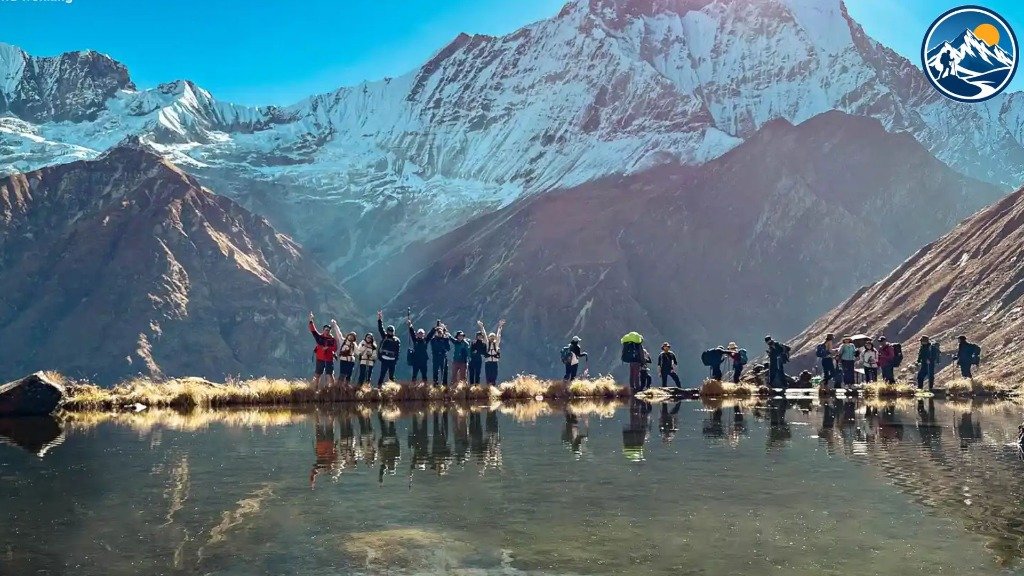
The Short Annapurna Base Camp Trek is a 5-day, Pokhara-to-Pokhara guided trek that reaches Annapurna Base Camp (4,130 m) using the most direct route on the mountain: Samrung, Chhomrong, and Machhapuchhre Base Camp (MBC). It brings hikers face-to-face with the sheer 3,000-meter south face of Annapurna I (8,091 m) inside the sacred Annapurna Sanctuary glacial amphitheater.
The trek gains approximately 2,650 to 2,700 meters of net elevation between the Samrung roadhead (~1,450 m) and Annapurna Base Camp over a round-trip walking distance of 55 to 60 kilometers. Unlike longer circuit itineraries or the classic 10-day route, this 5-day direct schedule bypasses Poon Hill and Ghorepani entirely, traveling straight through the dramatic Modi Khola river gorge to maximize time efficiency.
5 Core Himalayan Experiences on the Direct Route
From Gurung stone villages to sacred glacial sanctuaries and riverside hot springs.
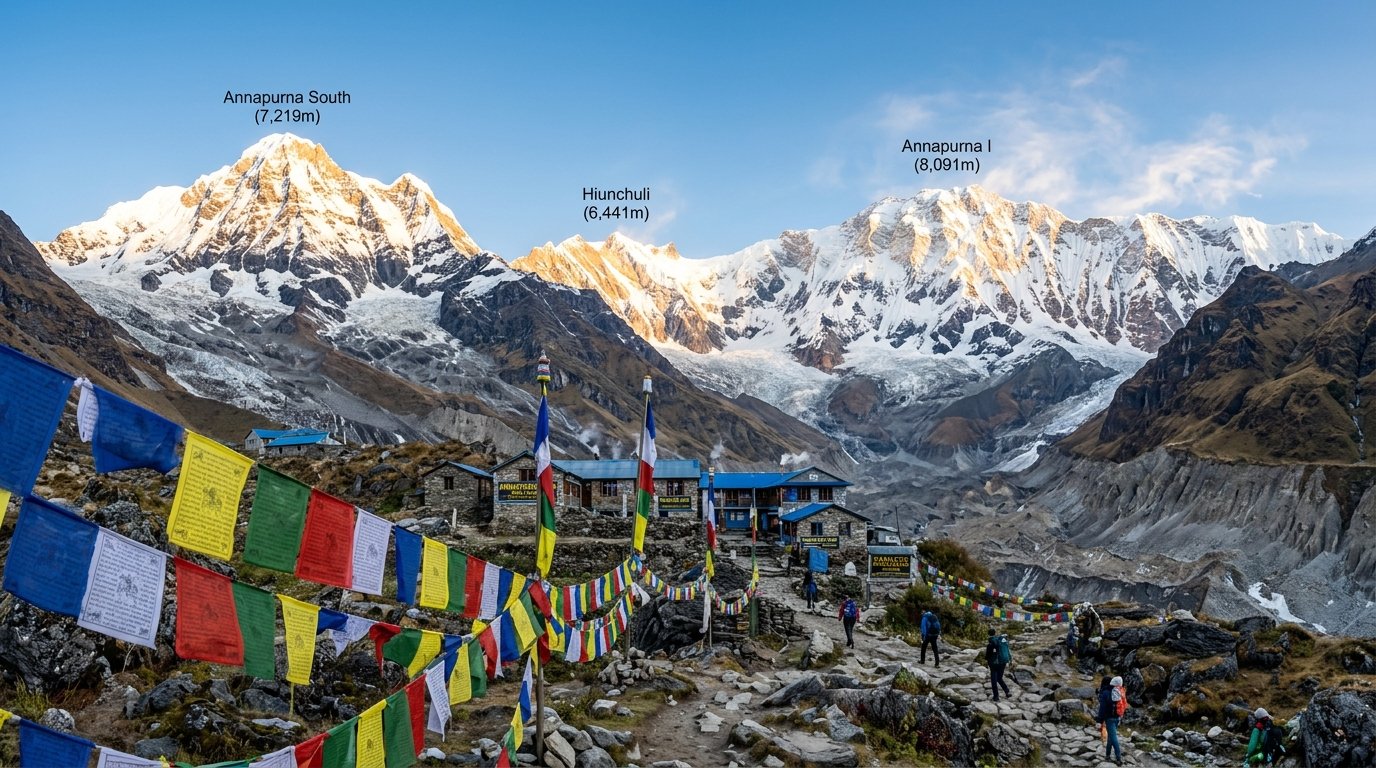 Elevation 4,130m · Summit Target
A 360-degree natural fortress of ice and rock. Marvel at the sheer 3,000m wall of Annapurna I, Hiunchuli, Annapurna South, and Tent Peak from your teahouse doorstep.
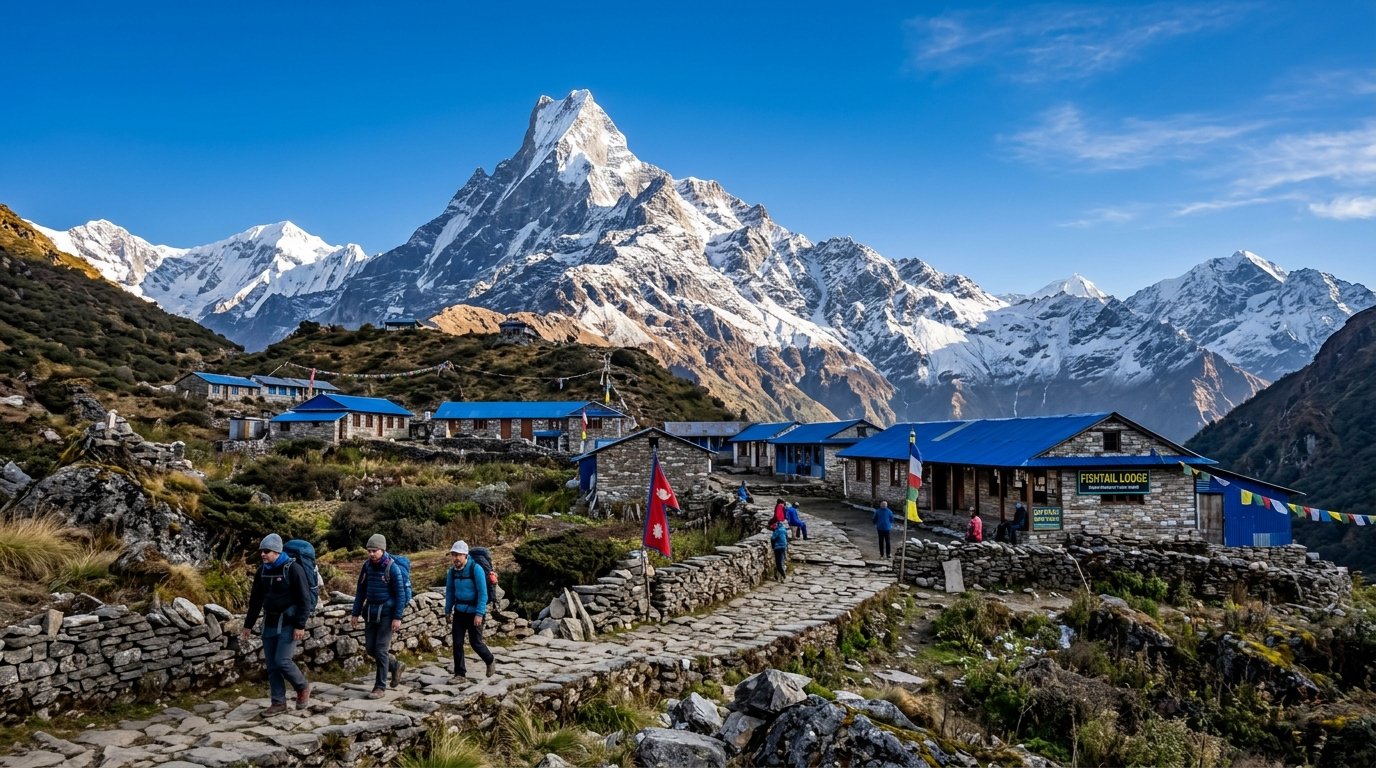 Elevation 3,700m · Gateway to ABC
The first major vantage point offering an intimate, towering close-up of Machhapuchhre's iconic Fishtail summit ridge before entering the inner sanctuary.
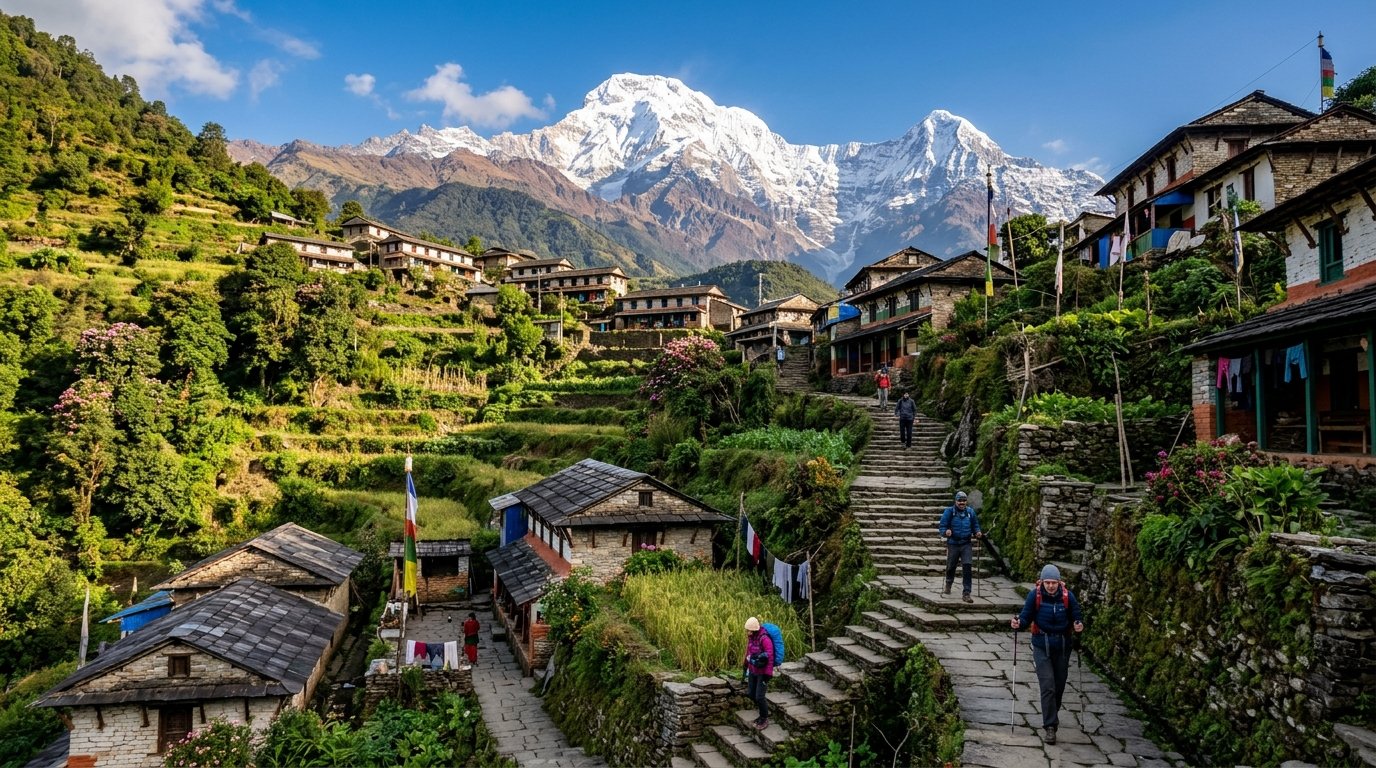 Elevation 2,170m · Day 1 Hub
The last major permanent settlement on trail. Steep stone staircases wind past blooming rhododendrons, terraced farms, and traditional Gurung mountain hospitality.
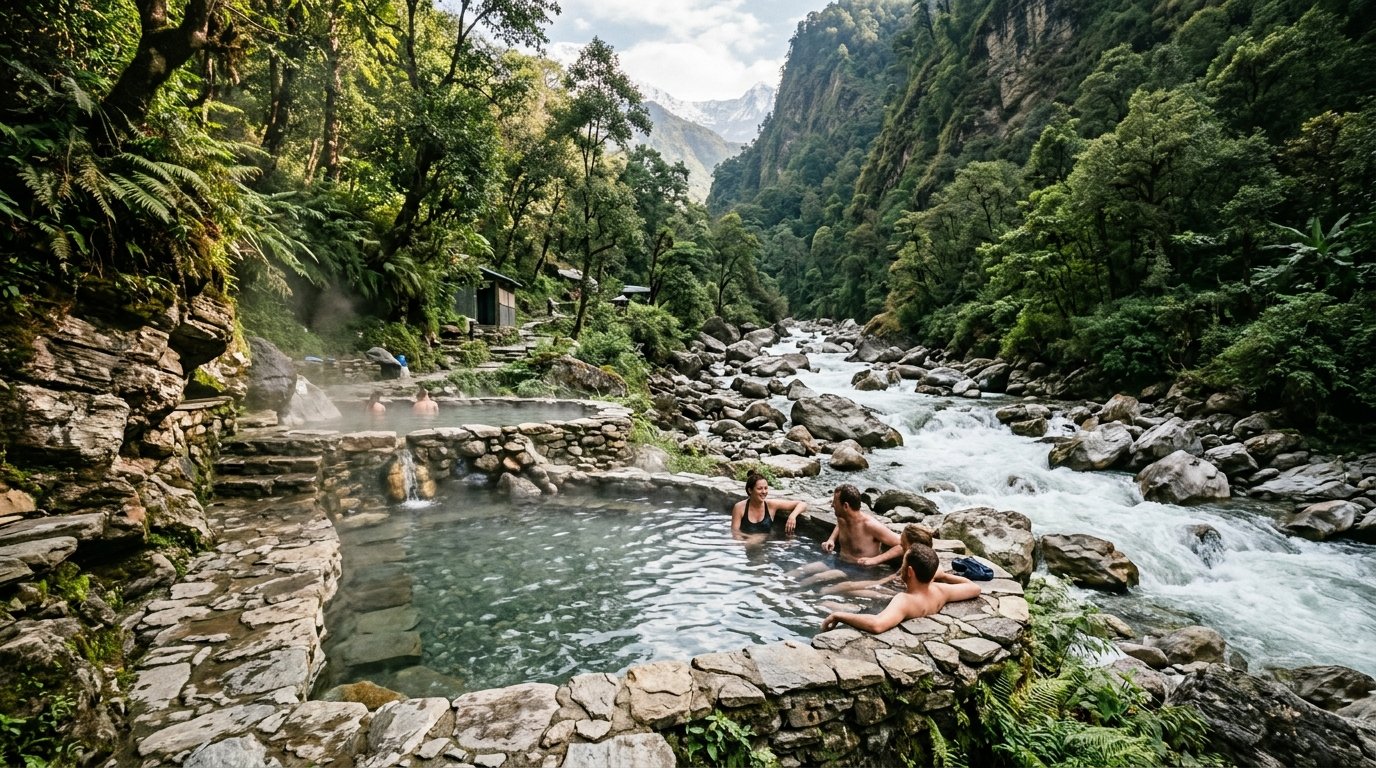 Elevation 1,780m · Day 5 Thermal Soak
On the final morning, celebrate completing the sanctuary climb by soaking weary leg muscles in natural hot mineral water pools right alongside the roaring Modi Khola river.
5-Day Elevation Profile & Climate Zones
Net altitude gain of ~2,700m from Samrung to Annapurna Base Camp across 4 distinct ecological belts.
| Climate Zone | Elevation Band | Route Stages | Flora, Terrain & Landscape | Typical Temperatures |
|---|---|---|---|---|
| Subtropical Foothills | 800m – 1,800m | Day 1 & Day 5 (Samrung, Jhinu) | Terraced river canyon, bamboo groves, natural hot springs | 20°C to 26°C / 12°C to 16°C |
| Temperate Forest | 1,800m – 3,000m | Day 1, 2, 4 (Chhomrong, Sinuwa, Himalaya) | Dense rhododendron, moss-draped oaks, massive stone stairways | 12°C to 18°C / 4°C to 8°C |
| Subalpine Gorge | 3,000m – 3,800m | Day 3 & Day 4 (Deurali, Machhapuchhre Base Camp) | Stunted birch, sheer canyon walls, avalanche chutes, glacial streams | 6°C to 12°C / 0°C to -4°C |
| Alpine Sanctuary (ABC) | 4,130m Amphitheater | Day 3 Night / Day 4 Sunrise | Glacial moraines, lateral glaciers, frozen scree, 360° snow walls | 2°C to 8°C / -5°C to -10°C |
Day-by-Day Expedition Itinerary
Paced for fit trekkers with direct private transport to minimize dirt-road walking. Click any day to view distances, trail notes, and lead guide advice.
| Day | Route Stage | Distance / Duration | Overnight Altitude |
|---|---|---|---|
| Day 1 | Drive Pokhara to Samrung; Trek to Chhomrong via Jhinu Danda | ~6 km trek, 2–3 hrs drive + 3 hrs trek | 2,170 m |
| Day 2 | Trek Chhomrong to Himalaya via Sinuwa & Bamboo | ~13 km, 6–7 hrs trek | 2,900 m |
| Day 3 | Trek Himalaya to Annapurna Base Camp via Deurali & MBC | ~13 km, 7–8 hrs trek (+1,230m climb) | 4,130 m |
| Day 4 | Trek Annapurna Base Camp to Sinuwa | ~16 km, 8 hrs trek (-1,790m descent) | 2,340 m |
| Day 5 | Trek Sinuwa to Jhinu Danda & Samrung; Drive to Pokhara | ~10 km trek + hot spring soak, 2.5–3.5 hrs drive | 822 m (Pokhara) |
Your expedition starts with an early morning pickup in Pokhara. We travel by private Scorpio 4WD along the Prithvi Highway and Lumle ridge down to the Modi Khola valley, continuing on the newly extended jeep track directly to Samrung (~1,450m). Bypassing dusty lower walking roads saves nearly a full day of redundant hiking.
From Samrung, we shoulder daypacks and cross the massive suspension bridge over the roaring Modi Khola river to Jhinu Danda. We begin the sustained climb up the celebrated stone staircases to Chhomrong (2,170m), an ancient Gurung settlement terraced steeply into the mountainside. Enjoy panoramic afternoon vistas of Annapurna South and Machhapuchhre directly ahead.
We start with a descent down 2,140 stone steps to the Chhomrong Khola suspension bridge, followed by an immediate, heart-pumping climb through lush bamboo forest to Upper Sinuwa (2,340m). From Sinuwa, the trail officially enters the protected inner gorge of the Annapurna Sanctuary where no permanent private villages exist.
We traverse cool, shaded trails through dense rhododendron and bamboo woodlands to Bamboo (2,310m) and Dovan (2,600m), accompanied by cascading waterfalls and vertical mossy cliff faces. A final steady ascent brings us to our teahouse in Himalaya (2,900m), positioned directly under a massive overhanging rock wall.
Our marquee summit day. We climb steadily past Hinku Cave and across the glacial moraines to Deurali (3,200m), where the tree line abruptly ends and the high alpine desert canyon opens up. As we ascend along the lateral moraine, the canyon widens into the gates of the sanctuary.
We take a nourishing hot lunch and hydration break at Machhapuchhre Base Camp (3,700m) with the Fishtail peak rising sheer above us. We then embark on the gentle 2-hour glacial incline up to Annapurna Base Camp (4,130m). Reaching the colorful prayer flags, you stand in the center of the world-famous 360-degree amphitheater of 7,000m and 8,000m giants: Annapurna I (8,091m), Annapurna South (7,219m), Hiunchuli (6,441m), and Gangapurna (7,455m).
We wake before dawn for one of the most sublime spectacles on Earth: first light striking the 8,091m summit of Annapurna I, turning the glaciers gold and magenta. After hot tea, porridge, and mountain photography, we begin our descent.
Because we are descending into increasingly oxygen-rich air, breathing becomes effortless, but descending nearly 1,800 vertical meters requires knee control. We retrace our footsteps down through MBC, Deurali, Himalaya, and Dovan, stopping for lunch in Bamboo before making the short final climb up to Upper Sinuwa (2,340m) for a peaceful night's rest.
We descend from Sinuwa to the Chhomrong Khola and conquer our last stone staircase climb back into Chhomrong village. From Chhomrong, we descend the scenic ridge trail to Jhinu Danda (1,780m).
Here, we take a 15-minute trail down to the natural geothermal hot spring pools built on the banks of the roaring Modi Khola river. Soaking in the natural 40°C mineral water provides instant physical rejuvenation. After lunch in Jhinu, a gentle 45-minute walk across the long suspension bridge brings us to our awaiting private 4WD at Samrung. We drive smoothly back to Pokhara, arriving by late afternoon in time for lakeside relaxation.
Which Short ABC Route Is Right for You?
Three different itineraries are sold under the "Short ABC Trek" banner. Here is an honest, direct comparison to help you choose the right route for your schedule and fitness.
| Route Variant |
This Trek
5-Day Direct Route (Fastest)
|
7-Day Ghorepani / Poon Hill | 8-Day Ghandruk Cultural | 10-Day Classic Sanctuary |
|---|---|---|---|---|
| Total Duration | 5 Days (Fastest) | 7 Days | 8 Days | 10 Days (Flagship) |
| Trailhead Start | Samrung (~1,450m) | Ulleri / Tikhedhunga | Ghandruk (~1,940m) | Nayapul / Birethanti |
| Total Distance | 55 – 60 km | 75 – 80 km | 70 – 75 km | 90 – 100 km |
| Includes Poon Hill? | No (Bypassed) | Yes (Sunrise included) | No (Extendable) | Yes (Full loop) |
| Acclimatization Rate | Compressed (Rapid Ascent) | Moderate buffer | Gentle progression | Optimal safety margin |
| Hot Springs Soak | Yes (Jhinu Danda) | Yes (Jhinu Danda) | Yes (Jhinu Danda) | Yes (Jhinu Danda) |
| Best Suited For | Tight schedules, fit trekkers with prior hiking experience | First-timers who want Poon Hill sunrise + Base Camp | Trekkers wanting cultural Gurung village depth | Trekkers wanting the ultimate unhurried Himalayan journey |
Short Annapurna Base Camp Trek Package Cost
Transparent per-person pricing tiers with zero hidden fees. Includes all permits, private transfers, lodges, meals, and licensed mountain crew.
Dedicated private guide, private porter, private 4WD transfer, and tailored trail pacing.
Book SoloIdeal balance of privacy and shared costs. Includes private guide and shared porter team.
Book Small GroupOptimal group rate for hiking clubs and friends traveling with shared logistics.
Book GroupMaximum efficiency for large university, charity, or corporate trekking groups.
Get Team QuoteWhat Is Included
100% Comprehensive-
All Mandatory Permits: Official ACAP (Annapurna Conservation Area Permit) and NTB TIMS Registration cards.
-
Licensed Mountain Leader: Government-certified, fluent English-speaking mountain guide led by Sugam Shrestha.
-
Ethical Porter Support: 1 porter per 2 trekkers (18kg max payload) following strict IPPG fair-wage guidelines.
-
4 Nights Mountain Lodging: Pre-booked private twin rooms at clean family-run teahouses across the route.
-
Full-Board Meals: Fresh cooked breakfast, lunch, and dinner daily from teahouse menus during all 5 trekking days.
-
Private Scorpio 4WD Transfers: Direct overland transit from Pokhara to Samrung trailhead and return.
-
Clinical Wilderness Kit: Digital pulse oximeter for daily SpO2 checks, high-altitude first aid, and emergency satellite link.
What Is Excluded
No Hidden Surcharges-
Nepal Entry Visa: $30 USD (15 days) or $50 USD (30 days), payable on arrival at Kathmandu Airport (KTM).
-
Travel & Evacuation Insurance: Mandatory policy covering hiking up to 4,500m and emergency helicopter extraction.
-
Pokhara Accommodations & Dinners: Hotel stays in Pokhara before or after the 5 trekking days.
-
Teahouse Extras: Hot bucket showers ($2–$4), device charging ($2–$3), Wi-Fi cards, and boiled drinking water.
-
Staff Gratuities: Customary tipping for your guide and porter team upon successful trip completion.
Where Do Trekkers Stay & What Do They Eat?
Authentic family-run teahouses, room amenities, and full-board mountain meal dynamics.
Trekkers sleep in teahouses, traditional mountain lodges run by local Gurung and Magar families. Rooms are clean, simple, and typically furnished with two single foam-mattress beds, clean bedsheets, and warm blankets (though bringing your own sleeping bag is strongly recommended for nights above 3,000m). Bathrooms are shared facilities on each floor, with western-style sit toilets at lower elevations transitioning to squat toilets higher on trail.
| Facility / Amenity | Availability by Altitude | Typical Cost (USD) | Practical Guide Advice |
|---|---|---|---|
| Private Twin Room | 100% Guaranteed across all 4 nights | Included in package | Pre-reserved by our guide to secure the best view rooms. |
| Hot Showers | Gas geysers in Chhomrong & Sinuwa; buckets at Himalaya/ABC | $2 to $4 USD | Shower at lower stops; avoid damp hair above 3,500m to prevent chills. |
| Electronic Charging | Solar / micro-hydro power outlets in dining rooms | $2 to $3 USD per device | Carry a 10,000–20,000mAh power bank; keep it warm inside your sleeping bag. |
| Wi-Fi Internet | Everest Link / teahouse Wi-Fi cards up to MBC | $2 to $4 USD / 24 hrs | Connection speeds vary; cellular data drops inside the steep canyon. |
| Drinking Water | Safe boiled water or water filter refills at lodges | $1 to $2 USD / Liter | Use a reusable Nalgene bottle with purification drops to minimize plastic waste. |
Meals follow a structured full-board schedule: Breakfast (7:00 AM), Lunch (12:30 PM), and Dinner (6:30 PM). Traditional Nepali Dal Bhat (steamed rice, savory lentil soup, spiced vegetable curry, mustard greens, and crisp papad) is cooked fresh to order and includes unlimited free refills—making it the absolute gold standard for replenishing caloric burn on trail.
How Do Trekkers Acclimatize Without a Rest Day?
Clinical altitude discipline and physiological monitoring on a compressed 5-day mountain schedule.
Unlike the classic 10-day Annapurna Sanctuary trek or the 14-day Annapurna Circuit, this short route does not have a dedicated acclimatization rest day. Reaching 4,130 meters safely in 3 days requires proactive physiological management by our licensed guiding team:
Gaining 1,230 vertical meters from Himalaya to ABC is this route's critical climb. Our guides regulate stride frequency, forcing deliberate rest-steps to prevent anaerobic exhaustion.
Respiratory moisture loss increases significantly in dry alpine air. Trekkers are required to drink 3.5 to 4 liters of water and electrolyte fluids daily to support blood volume and oxygenation.
Every morning and evening, Sugam Shrestha logs your blood oxygen saturation (SpO2) and resting heart rate to establish physiological trend lines and spot AMS symptoms early.
Descent is the ultimate cure for Acute Mountain Sickness. If severe symptoms arise, our crew initiates immediate assisted descent to Deurali (3,200m) or Himalaya (2,900m) with emergency evacuation support.
When Is the Best Time for the Short ABC Trek?
Weather dynamics across autumn, spring, winter, and monsoon in the Modi Khola canyon.
Autumn (September – November)
-
Post-Monsoon Air: Cleared of summer haze; offers the sharpest photography of Annapurna I and Machhapuchhre.
-
Stable Weather: Low risk of heavy precipitation or snow closure below 4,130m.
Spring (March – May)
-
Blossoming Forests: Entire valley hillsides from Chhomrong to Bamboo explode in vibrant rhododendron flowers.
-
Wildlife Activity: Himalayan langurs, Himalayan monals (Danphe), and alpine birds active along trails.
What to Pack for 5 Days in the Sanctuary
Split between your main duffel bag (carried by your porter, max 9kg per trekker) and your personal daypack (carried by you, 4–5kg).
- UV-blocking polarized sunglasses (Cat 3 or 4)
- Warm thermal beanie / fleece cap for cold nights
- Wide-brim sun hat for lower valley hiking
- Fleece-lined windproof trekking gloves
- Buff / neck gaiter (protects against dry mountain cough)
- 2–3 Moisture-wicking technical t-shirts (synthetic or merino)
- 1 Thermal base layer top (merino wool recommended)
- 1 Mid-weight fleece jacket or grid-fleece pullover
- 1 Heavy insulated down jacket (rated to -10°C)
- 1 Breathable waterproof / windproof shell jacket (Gore-Tex)
- 2 Pairs of durable, quick-dry stretch trekking pants
- 1 Thermal base layer bottoms (leggings / long johns)
- 1 Lightweight waterproof shell pants for rain/snow
- 3–4 Pairs of moisture-wicking merino wool trekking socks
- Swimwear or quick-dry shorts for Jhinu Danda hot springs
- Broken-in, waterproof hiking boots with solid ankle support
- Light camp shoes / sandals for teahouses and hot springs
- Adjustable trekking poles (mandatory for steep staircases)
- 20L–25L Daypack with waterproof rain cover
- 3-season sleeping bag (rated to -5°C or -10°C)
- Headlamp with spare batteries (for early sunrise walks)
Honest Pros & Cons of the 5-Day Direct Route
Evaluate whether the compressed timeline matches your expectations.
Advantages (Pros)
- Fastest Route on the Market: Reaches Annapurna Base Camp and returns in just 5 days from Pokhara.
- Lowest Total Expedition Cost: Saves 2 to 5 days of guide, porter, food, and lodging expenses ($450–$850 total).
- Private Trailhead Logistics: Jeep transit directly to Samrung eliminates miles of dusty road walking.
- Jhinu Danda Hot Springs: Relaxes leg muscles in natural thermal pools on the final descent day.
- Ideal for Conditioned Hikers: Highly rewarding for fit trekkers with limited vacation time.
Trade-offs (Cons)
- No Dedicated Rest Day: Unlike the 10-day classic trek, every day is an active trail day.
- Strenuous Summit Day: Gains +1,230m from Himalaya to ABC in a single day.
- Intense Descent Day: Day 4 drops nearly 1,800m back to Sinuwa, which demands strong knees.
- Does Not Include Poon Hill: Trekkers whose top priority is the Poon Hill sunrise should book the 7-day variant.
- Not for Absolute Beginners: Requires prior hiking experience or solid cardiovascular fitness.
Who Should (and Shouldn't) Book This Trek?
Good Fit: Trekkers with 5 to 7 total vacation days in Nepal, individuals with solid hiking experience or good marathon/cardio conditioning, and travelers combining trekking with Pokhara paragliding, Chitwan wildlife safaris, or Kathmandu cultural tours.
Not a Good Fit: Complete beginners with no prior hiking background, families with young children, or trekkers seeking an unhurried, meditative pace with daily acclimatization layovers. For those travelers, our flagship 10-Day Classic Annapurna Base Camp Trek is strongly recommended.
Frequently Asked Questions
Common questions about the 5-day direct Annapurna Base Camp express route.
No. This 5-day direct route enters and exits via Samrung and Chhomrong, completely bypassing Ghorepani and Poon Hill. If catching the sunrise over Dhaulagiri from Poon Hill is a mandatory highlight for your trip, consider booking our 7-day Ghorepani/Poon Hill variant or our flagship 10-day classic sanctuary trek.
Per day, yes. Both routes reach the exact same 4,130-meter high amphitheater, but this 5-day version compresses the ~2,700m net ascent and descent into fewer days. You will walk 6 to 8 hours daily on stone steps with no built-in rest day, requiring higher cardiovascular stamina.
No. Since April 1, 2023, the Nepal Tourism Board has officially prohibited solo independent foreign trekking in all national parks and conservation areas, including the Annapurna Sanctuary. Every international trekker must be accompanied by a licensed guide from a registered trekking company. All ABC Trek in Nepal packages 100% include official government-licensed guiding.
There is no formal government age cutoff, but trekkers should be in solid general physical health with no untreated cardiac, pulmonary, or serious orthopedic issues. Due to the high number of steep stone staircases and accelerated elevation gain, we recommend this specific 5-day itinerary for ages 12 to 65 with good endurance.
Wi-Fi is available at most teahouses up to Machhapuchhre Base Camp for a small daily fee ($2 to $4 USD). Signal speeds can be intermittent during peak evening hours or cloudy weather. Cellular data (Ncell / NTC) operates decently up to Sinuwa but drops out once deep inside the river canyon.
No. There are zero ATM machines along the trekking route past the highway corridors. Trekkers must withdraw sufficient cash (Nepali Rupees) in Pokhara prior to departure to cover personal expenses on trail such as hot showers, device charging, extra snacks, and guide/porter tips.