
Annapurna Base Camp Trek in September: Weather, Cost, Itinerary & Complete Guide
The Annapurna Base Camp Trek takes you from the foothills around Pokhara through mountain villages and the Annapurna Sanctuary to Annapurna Base Camp at 4,130 m (13,550 ft), surrounded by peaks like Annapurna I (8,091 m) and Machhapuchhre (6,993 m). The trek typically takes 7–12 days, with overnight stays in high-altitude teahouses.
September can be a rewarding month for trekking to Annapurna Base Camp, but conditions vary substantially across its 30 days. Early September still brings tail-monsoon showers and muddy trails, while late September ushers in clear skies and crisp Himalayan panoramas. For comprehensive seasonal breakdowns, see our Complete Annapurna Base Camp Trek Planning Guide.
This authoritative field guide covers September weather, temperature gradients, trail conditions, duration variants from our Short ABC Trek to the 10-Day Classic Sanctuary, permit logistics, packing essentials, and altitude safety protocols.
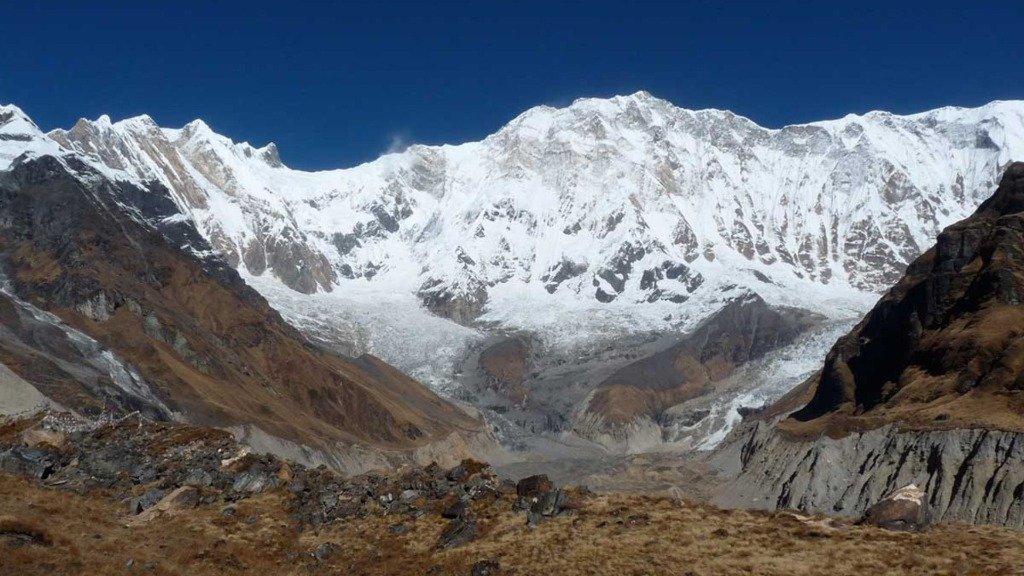
Key Takeaways: September Conditions at a Glance
Quick field telemetry snapshot for planning an Annapurna Sanctuary expedition in September:
| Factor | September Conditions |
|---|---|
| Trek duration | 7–12 days |
| Maximum elevation | 4,130 m |
| Weather | Rainy early in the month, clear and dry late in the month |
| Temperature (ABC) | Day 5–10°C; night near/below freezing |
| Rainfall | 150–250 mm, mostly first two weeks |
| Trail conditions | Muddy early, firm and dry late |
| Mountain views | Hazy early, some of the year's clearest late |
| Crowds | Low early-mid month, building to moderate by the final week |
| Accommodation | Teahouses open along the whole route |
| Difficulty | Moderate; early-month mud adds effort |
| Permits | ACAP only (NPR 3,000 / ~USD 23) + mandatory licensed guide — TIMS discontinued for this region |
| Cost | Same range as other autumn months (USD 600–1,300) |
Is September a Good Month for the ABC Trek?
Yes, if you pick your week carefully — late September is excellent, early September is a real gamble on rain.
September sits at the monsoon-to-autumn transition, which brings three unique advantages: the greenest alpine scenery of the year, cascading full-flow waterfalls, and significantly fewer trekkers than peak October or November. For trekkers wanting tranquility, our 10-Day Classic Sanctuary Trek in late September offers an ideal balance of calm trails and emerging crystal clarity.
The September Weather Shift: Week-by-Week Breakdown
How weather, visibility, and trail ground conditions evolve over the 30 days of September:
- Afternoon rain frequent (Nayapul to Chhomrong)
- Muddy steps & leeches in lower forests
- Mountain peaks often enveloped in clouds
- Scenery: Vibrant emerald greens, surging cascades
- Rain volume drops noticeably week by week
- Stone staircases firm up as humidity drops
- Morning visibility windows expand significantly
- Scenery: Clear morning panoramas with lush valleys
- Rivals October for razor-sharp Himalayan clarity
- Dry, reliable footing on high sanctuary trails
- Reliable sunrise views of Annapurna I & Machhapuchhre
- Scenery: Peak post-monsoon crispness, moderate crowds
Best fit for September: Trekkers who want lush scenery and quiet trails, have flexible dates, and are comfortable carrying rain gear if needed.
Better off in October/November: Trekkers on rigid dates who require guaranteed clear weather and the driest possible trail conditions throughout.
Advantages of September
- Greenest scenery and fullest waterfalls of the entire year
- Fewer trekkers, relaxed trail pacing, and easier teahouse booking
- Late September rivals October for crystal-clear morning skies
- Warmer lower valleys before winter cold sets in
Disadvantages of September
- Rain likely in the first half of the month
- Muddy and slippery stone staircases early on
- Leeches present in lower, humid forest stretches
- Mountain views not guaranteed in early-to-mid September
Weather in September
Weather is transitional: warm and humid low down, cold and clear-to-cloudy up top, improving steadily through the month.
Atmospheric Lapse Rate: Temperature drops roughly 6.5°C per 1,000 m climbed — over the trek's 3,060 m net gain, that is the difference between a humid Pokhara morning (28°C) and a near-freezing night at Base Camp (0°C to -2°C).
Temperature Drop Across Key Trekking Stations
Rain: 150–250 mm across the month, mostly in the first two weeks, tapering through the second half. Nepal's official monsoon withdrawal benchmark (Department of Hydrology and Meteorology) is October 2, with recent years seeing rain linger into early-to-mid October — so even a good late-September window carries some residual monsoon risk, not a guarantee of dry skies.
Snow: Rare at ABC in September due to still-mild temperatures, though light sleet or a brief dusting is possible above 3,500 m during a late-month cold snap. Consistent snow cover doesn't typically arrive until late autumn and winter (late November–February).
Clouds and views: Heaviest cloud cover early in the month, usually in the afternoon (mornings stay clearer, which is why Poon Hill sunrise is scheduled early). By late September, skies are often clear from morning through afternoon, and views of Annapurna I, Annapurna South, and Machhapuchhre become some of the sharpest of the year.
Prepare for: Sudden afternoon rain early in the month, a sharp temperature drop above 3,000 m regardless of how warm the day felt, and the real chance a scheduled viewpoint is clouded over if you're trekking before mid-month.
Trail Conditions in September
Muddy and slippery in the first half, firm and easy by the second half — same trail, different ground.
- Muddy and slippery steps: Worst in the forested stretches between Nayapul, Jhinu Danda, Chhomrong, and Bamboo, where tree cover keeps ground wet longest. Clears up by late September.
- Leeches: Present in the same lower, wooded, wetter stretches, mainly early in the month. Leech socks or a bit of salt are the standard precaution.
- Rain pattern: Usually afternoon/evening showers rather than all-day rain, so mornings often stay walkable even on a rainy-forecast day.
- Landslide risk: Highest June–August; still elevated in early September on steep, exposed sections after heavy rain, then drops off. A guide's current knowledge of trail conditions matters more here than in dry months — our lead specialist Sugam Shrestha and field guides continuously assess Modi Khola gorge stability daily.
- Higher elevations (above ~3,000 m): Rockier and more exposed, less mud, but colder and windier — rain here can turn to sleet or light flurries late in the month.
- Teahouses: Open along the whole route year-round; easier to book in September than in October/November due to lower demand.
- Crowds: Low through early and mid-September, building to moderate in the final week as the peak autumn season approaches.
Route and Elevation
The trek climbs from the Modi Khola trailheads — Nayapul (1,070 m) or modern jeep heads like Kimche, Matque, and Siwai (1,200–1,500 m) — up to Annapurna Base Camp (4,130 m), a net gain of over 3,000 m through forest, farmland, and mountain villages. The classic route is detailed in our 10-Day Annapurna Base Camp Classic Package, while time-conscious hikers can opt for the Short ABC Trek or 8-Day Rapid ABC Route.
Start / End: Nayapul or upper jeep trailheads to Pokhara, concluding with a therapeutic soak in Jhinu Danda's natural riverside hot springs.
Route sequence: Nayapul → Tikhedhunga → Ghorepani → Poon Hill → Tadapani → Chhomrong → Sinuwa → Bamboo → Dovan → Himalaya → Deurali → Machhapuchhre Base Camp → Annapurna Base Camp, then down via Jhinu Danda to Pokhara. Those wishing to add sunrise panoramas can explore our Ghorepani Poon Hill Trek, or consider the ridge scenery of the Mardi Himal Trek.
Landscape by Elevation Zone
Highest points: Annapurna Base Camp (4,130 m); Poon Hill (3,210 m) if included. Machhapuchhre Base Camp (3,700 m) is the last stop before ABC, both sitting inside the Annapurna Sanctuary — a glacial basin ringed by peaks including Annapurna I (8,091 m) and Machhapuchhre (6,993 m).
Toughest sections: The Tikhedhunga–Ulleri stone staircase (over 3,200 stone steps), and Chhomrong's steep down-river-up sequence — both harder still in early September's mud.
How Many Days Does It Take?
7 to 12 days, depending on route and buffer days. Most trekkers walk 7–10 days plus 2–3 travel days between Kathmandu and Pokhara; the Poon Hill version runs 10–12 days total.
| Version | Days | Best Fit |
|---|---|---|
| 7-Day Express (via Ghandruk, no Poon Hill) | 7 | Short on time; strong fitness required |
| 8-Day Rapid (with Poon Hill) | 8 | Compact schedule with Poon Hill sunrise |
| 10-Day Classic Sanctuary (Recommended) | 10 | Optimal acclimatization, buffer days & first-timers |
Daily pace: 5–7 hours walking, 8–15 km, usually 300–600 m elevation gain — except the final Deurali–ABC day, which gains 900–990 m, the trek's steepest single day.
Buffer day: Highly recommended if trekking in early September to absorb weather delays without compromising base camp arrival. You can build customized contingency days using our interactive Trip Planning Wizard →
Difficulty in September
Moderate difficulty year-round; September adds wet, muddy underfoot conditions in the first half that make the same climbs feel harder.
No technical skill is required, but expect several consecutive days of uphill/downhill walking on uneven ground at rising altitude. Most first-time trekkers complete it successfully.
What makes it hard: Steep stone steps (worst at Tikhedhunga–Ulleri), repeated steep up-and-down sections (Chhomrong), and altitude on the final approach. September rain doesn't change the distance or climbing — it makes each step more tiring and slower, an effect that fades by late month.
Fitness benchmark: Comfortable walking 5–7 hours with a light daypack on hills and stairs.
Training (a few weeks beforehand): Regular hiking building to 2–3 hour sessions, stair/hill practice, a few loaded practice walks, general cardio. Downhill-specific training matters as much as uphill — it's the part most trekkers underprepare for, and trekking poles help both directions.
Altitude Sickness and Acclimatization
Annapurna Base Camp (4,130 m) sits well above the 2,500 m threshold where altitude sickness becomes a real risk — the same risk every month, unrelated to September's weather. See our high-altitude medical protocols and evacuation guidance for how we handle this on trek.
General medical information based on CDC Yellow Book guidance and NIH research — not personal medical advice. Talk to a doctor before your trip, especially with any heart, lung, or existing condition.
- Altitude gain: Mostly 300–600 m/day, except the final Deurali–ABC day (900–990 m) — the point where acclimatization matters most.
- Acute Mountain Sickness (AMS): Headache plus at least one of nausea, fatigue, dizziness, or poor sleep, usually within 6–12 hours of reaching a new altitude.
- Serious warning signs — descend immediately: Confusion, loss of coordination, breathlessness at rest, or a persistent cough/choking feeling at night.
- Reducing risk: Climb slowly, stay hydrated, avoid alcohol and sleeping pills at altitude, avoid overexertion, tell your guide immediately if you feel unwell.
- Fitness doesn't prevent AMS: A strong, well-trained hiker can still get it. The real risk factors are ascent speed, altitude reached, and prior AMS history.
- If symptoms appear: Rest at the same altitude, hydrate, don't climb higher until they ease, and tell your guide. If symptoms worsen or a serious warning sign appears, descend — even a few hundred metres helps, and it's the single most effective treatment.
Itinerary in September
The physical route follows our benchmark 10-Day Annapurna Base Camp Classic Itinerary. In September, deliberate pacing allows your team to navigate morning cloud patterns and avoid afternoon showers:
Pokhara to Nayapul (Trailhead)
Allow buffer time — occasional monsoon-related road delays early in the month along the Pokhara-Baglung highway.
Nayapul to Tikhedhunga / Ulleri
The infamous stone staircase of over 3,200 steps; noticeably slower and requires deliberate footing when wet.
Ulleri to Ghorepani (Poon Hill Next Morning)
Climbing through mossy oak and rhododendron forest. Note that sunrise views from Poon Hill are not guaranteed before mid-month.
Ghorepani to Chhomrong via Tadapani
Physically the toughest day of the approach due to repeated ridge climbs and steep valley descents, heavier going if muddy.
Chhomrong to Himalaya / Deurali
Descend to Chhomrong Khola, climb via Sinuwa, then traverse bamboo and rhododendron forest through Dovan — cooler, more humid, with fewer leeches as elevation rises.
Deurali to Annapurna Base Camp via MBC
Biggest net altitude gain (+900m to +990m); entering the Sanctuary amphitheater. Less mud, more exposure to wind and cold above 3,000 m.
ABC to Bamboo (Descent Begins)
Catching morning sunrise over Annapurna I and Annapurna South, then retracing steps down the valley. Much faster than the ascent.
Bamboo to Jhinu Danda to Pokhara
Relaxing hot springs stop on the banks of the Modi Khola at Jhinu Danda before crossing the suspension bridge to the jeep head for the drive back to Pokhara.
Why duration varies: Whether Poon Hill is included via the Poon Hill circuit, how many buffer days you add, and where you start walking from.
Keep flexibility in your schedule: A day or two of slack lets you wait out bad weather instead of pushing through low visibility. Build your bespoke itinerary with our Interactive Trek Planner →
Cost in September
A guided package runs USD 600–1,300 per person — the same range as the rest of autumn. September doesn't change the price; it just means less competition for rooms.
| Item | Cost |
|---|---|
| ACAP permit | NPR 3,000 (~USD 23) |
| Teahouse room | USD 3–8 / night |
| Meals | USD 20–30 / day |
| Water (bottled / purified) | USD 1–3 / litre |
| Hot shower | USD 3–5 |
| Wi-Fi | USD 2–5 / day |
| Device Charging | USD 2–4 / hour |
| Kathmandu–Pokhara (bus / flight) | USD 15–25 / USD 75–130 |
| On-trail direct expenses (meals + lodging, excl. guide/porter) | USD 35–50 / day |
What's included in our packages: All required ACAP permits, licensed mountain leaders, porter logistics, teahouses, private transport, and safety monitoring — view complete inclusions on our 10-Day Classic Sanctuary page.
Typically excluded industry-wide: International flights, personal travel/medical rescue insurance, tips, Wi-Fi, battery charging, and alcoholic/soft drinks.
A licensed guide is mandatory for every trekker on this route (see Permits below) — there's no independent/solo option, so guide and porter fees sit on top of the on-trail expenses above. Carry USD 100–150 extra in cash (Nepalese Rupees) for trail costs or a weather-delayed extra night.
Permits and Requirements
Only the Annapurna Conservation Area Permit (ACAP) is required, alongside a mandatory government-licensed guide. The TIMS card has been discontinued for the Annapurna region since the guide mandate took effect.
| Permit | Cost | Purpose |
|---|---|---|
| ACAP | NPR 3,000 (~USD 23 foreign; NPR 1,000 SAARC; under-10s exempt) | Conservation area entry & environmental stewardship |
You'll need a valid passport, photos, and insurance details to apply. ACAP is obtained through a registered agency or Nepal Tourism Board offices in Kathmandu/Pokhara, and checkpoints (e.g., Birethanti) verify only the ACAP permit and your registered guide's credentials — not a TIMS card, which no longer applies here.
A licensed guide has been mandatory since April 2023 — independent solo trekking is no longer permitted. Checkpoints in Birethanti and Chhomrong strictly inspect both ACAP paperwork and your guide's government credentials. Our team manages all administrative clearances directly through our Kathmandu & Pokhara operations bases.
Guide or Porter?
A guide is legally required; a porter is optional but genuinely useful in September, when trail knowledge and reduced load matter more than in the dry months.
A licensed guide leads the trek, monitors trail conditions in real-time, and administers wilderness first aid. Led by Sugam Shrestha, all our mountain leaders are certified in high-altitude medicine and emergency evacuation. A porter carries heavy duffels (strictly capped at 20 kg between two trekkers under our ethical porter welfare standards), easing physical strain so you can focus on foot placement on wet stone staircases.
Accommodation and Food
Teahouses run along the whole route year-round, and September's lower crowds make booking easier than in peak months.
Rooms are mostly twin-share; lower-elevation teahouses (Ghandruk, Chhomrong) sometimes have attached bathrooms, thinning to shared/squat toilets higher up. Dal bhat (rice, lentils, vegetable curry, often with a free refill) is the trail staple everywhere; breakfast options include porridge, eggs, and Tibetan bread. Water should be purified or bottled. Hot showers are generally available up to the mid-route, Wi-Fi and charging cost extra and get pricier with altitude, and rooms simplify to just a bed and blanket above Sinuwa.
What to Pack
September means packing for two climates: humid lower elevations and near-freezing nights at base camp — with rain gear mattering more this month than in the dry season.
- Waterproof protection: High-grade waterproof jacket (Gore-Tex or equivalent) and sturdy rain pack cover.
- Moisture management: Quick-dry synthetic or merino base layers (avoid cotton at all costs).
- Insulation mid-layers: Fleece jacket + -10°C to -15°C rated down jacket for chilly teahouse evenings.
- Thermal accessories: Warm fleece beanie, sun hat, UV sunglasses, and lightweight windproof gloves.
- Footwear: Broken-in waterproof trekking boots with ankle support + 4 pairs of merino hiking socks.
- Trekking poles: Essential for stability and knee protection on wet stone staircases.
- Sleeping bag: 0°C to -10°C rated sleeping bag (teahouse blankets are limited in high camps).
- Trail essentials: LED headlamp, 1L water bottles with purification tablets/drops, power bank (10,000–20,000 mAh).
- First-aid & hygiene: Personal blister kit, AMS medication (Diamox after medical advice), sunscreen SPF 50+.
- September forest specialty: Leech socks or a small pinch of salt for lower forest sections.
- Documents: Passport, ACAP permit, travel insurance policy papers, and sufficient NPR cash.
Transportation
Kathmandu to Pokhara, then Pokhara to the trailhead — with a buffer worth building in given September's residual monsoon risk.
| Option | Cost | Time |
|---|---|---|
| Tourist bus | USD 15–25 | 6–8 hrs |
| Domestic Flight | USD 75–130 | 35 min |
| Private car / 4WD jeep | USD 120–180 (vehicle) | 5–7 hrs |
| Local bus | USD 4–7 | 7–9 hrs |
From Pokhara, it's about 1.5 hours by jeep to Nayapul. The Prithvi Highway passes landslide-prone stretches (Benighat, Dumre) that can close without warning in the wet season, and flights are weather-dependent — don't book a tight connection on either end of your trip, particularly in the first half of September.
Safety Tips
- Check weather each morning: Consult your guide before departure regarding rainfall patterns and gorge stability.
- Prepare for sudden rain: Keep waterproofs and pack covers at the top of your rucksack.
- Use trekking poles: Crucial for maintaining 3 points of contact on wet, mossy stone stairs.
- Manage altitude carefully: Ascend at a steady, sustainable pace (Bistari, Bistari) and never climb with severe headache or nausea.
- Stay hydrated: Drink 3–4 liters of purified water daily to assist oxygen delivery at rising altitude.
- Avoid alcohol at altitude: Alcohol accelerates dehydration and masks early symptoms of AMS.
- Protect against strong UV: Solar radiation remains intense at 4,000m even under light cloud cover.
- Know when to stop: Never hesitate to turn around or rest rather than pushing through bad weather or illness.
- Emergency insurance: Ensure your travel policy covers medical helicopter evacuation up to 4,500m.
- Confirm evacuation procedures: Review emergency rescue and communication protocols with your guide upfront.
September vs. Other Months
How September stacks up against the peak autumn months of October and November:
| Factor | September | October | November |
|---|---|---|---|
| Rain | Moderate, early month | Low | Very low |
| Visibility | Improving through month | High | Highest |
| Crowds | Low | High | High |
| Trail | Muddy early, dry late | Dry | Dry |
| Overall Rating | Good in back half | Excellent | Excellent |
vs. October/November: Less weather certainty, but vibrant emerald scenery and far fewer people. For details on peak autumn months, see our Ultimate Guide to Annapurna Base Camp.
vs. August: A clear step up — August is full monsoon with pervasive leeches, river surges, and persistent cloud cover.
vs. High Pass Treks: If you seek alpine passes rather than a valley sanctuary, late September is also the prime opening window for the 14-Day Annapurna Circuit Trek over Thorong La (5,416 m).
While lower ABC trails receive lingering late-monsoon showers in early September, the upper Annapurna Circuit valleys of Manang and Mustang sit in the Himalayan rain shadow and remain arid and clear. Explore our complete route dossier: 14 Days Annapurna Circuit Trek: Itinerary, Cost & Map →
Frequently Asked Questions (FAQs)
Answers to common questions about trekking Annapurna Base Camp in September:
Is September a good time to trek Annapurna Base Camp?
Does it rain at Annapurna Base Camp during September?
What is the temperature at Annapurna Base Camp in September?
Is the Annapurna Base Camp trail crowded in September?
Are teahouses and lodges open along the route in September?
Is it safe to trek Annapurna Base Camp in September?
Can beginner trekkers do the Annapurna Base Camp trek in September?
How much does the Annapurna Base Camp trek cost in September?
Do you need a licensed guide for the Annapurna Base Camp trek?
Does it snow at Annapurna Base Camp in September?
The Conclusion
September suits trekkers who want lush scenery, quieter trails, and can lean toward the back half of the month or accept some early-month rain risk.
It's less ideal for trekkers who need guaranteed clear weather on fixed dates or want zero chance of mud.
For the most predictable dry weather, October or November are the safer bet — at the cost of bigger crowds. September trades some certainty for green landscapes, full waterfalls, and a quiet trail.

NMA Licensed Mountain Leader & Wilderness First Responder (WFR) with 10 years of experience as an Annapurna Trekking Guide specializing in Annapurna Region Trekking. Sugam oversees expedition logistics and conservative acclimatization protocols through the Modi Khola gorge into the Sanctuary. View his certifications and leadership record on his Expedition Director Profile →
The 10-Day Classic Sanctuary Trek
Trek the Annapurna Sanctuary with licensed mountain leaders, conservative ascent gradients, and guaranteed teahouse rooms.